Will A.I. Kill Us? Can It Hack My Bank Account? Your A.I. Questions Answered
Nearly 1,000 readers sent us their questions about artificial intelligence, its potential and its potential risks.
Nearly 1,000 readers sent us their questions about artificial intelligence, its potential and its potential risks.
The discovery of “hypersoft” X-ray beacons could help solve some mysteries about the universe.
Paleontologists have discovered the tracks of a giant — the fossilized footprints of T. rex. Plus, solar "superflares" and the brain benefits of reading in this week's Short Wave science news roundup.
It’s the only example of a dinosaur-era feather found within rock that wasn’t completely flattened through the centuries.
The European Organization for Nuclear Research, or CERN, will dismantle the Large Hadron Collider, which helped discover the so-called God Particle, in order to build a more powerful particle accelerator.
The winners of this year’s Nikon Small World in Motion competition showcase the wiggly, feathery, undulating beauty of invisible life.
The winners of this year’s Nikon Small World in Motion competition showcase the wiggly, feathery, undulating beauty of invisible life.
The animals may help reveal the causes of brain disease in people and point the way to treatments. But researchers already are calling for new ethical guidelines.
Hotter than a crocodile, cooler than a chicken, T. Rex was definitely warm-blooded, according to a new study.
A new simulation suggests little red dots, unusually compact objects seen in photos from space, might be one stage in the evolution of black holes.
“Recursive self-improvement” is the idea that artificial intelligence could learn to build and train itself, creating exponential new progress — and risk.
Experts say that after childbirth, intrusive thoughts are common and mostly benign. Lindsay Clancy’s story provides a disturbing exception.
Conservationists set up a colony of white storks in southern England, touching off a debate over whether they truly belong there.
Kent Hups, a high school science teacher in Colorado, discovered a 23-foot trackway of fossilized dinosaur footprints, which offer a glimpse of how the apex predator moved 66 million years ago.
We found grace, humanity and friendship in the stories of disparate Americans hit by climate chaos.
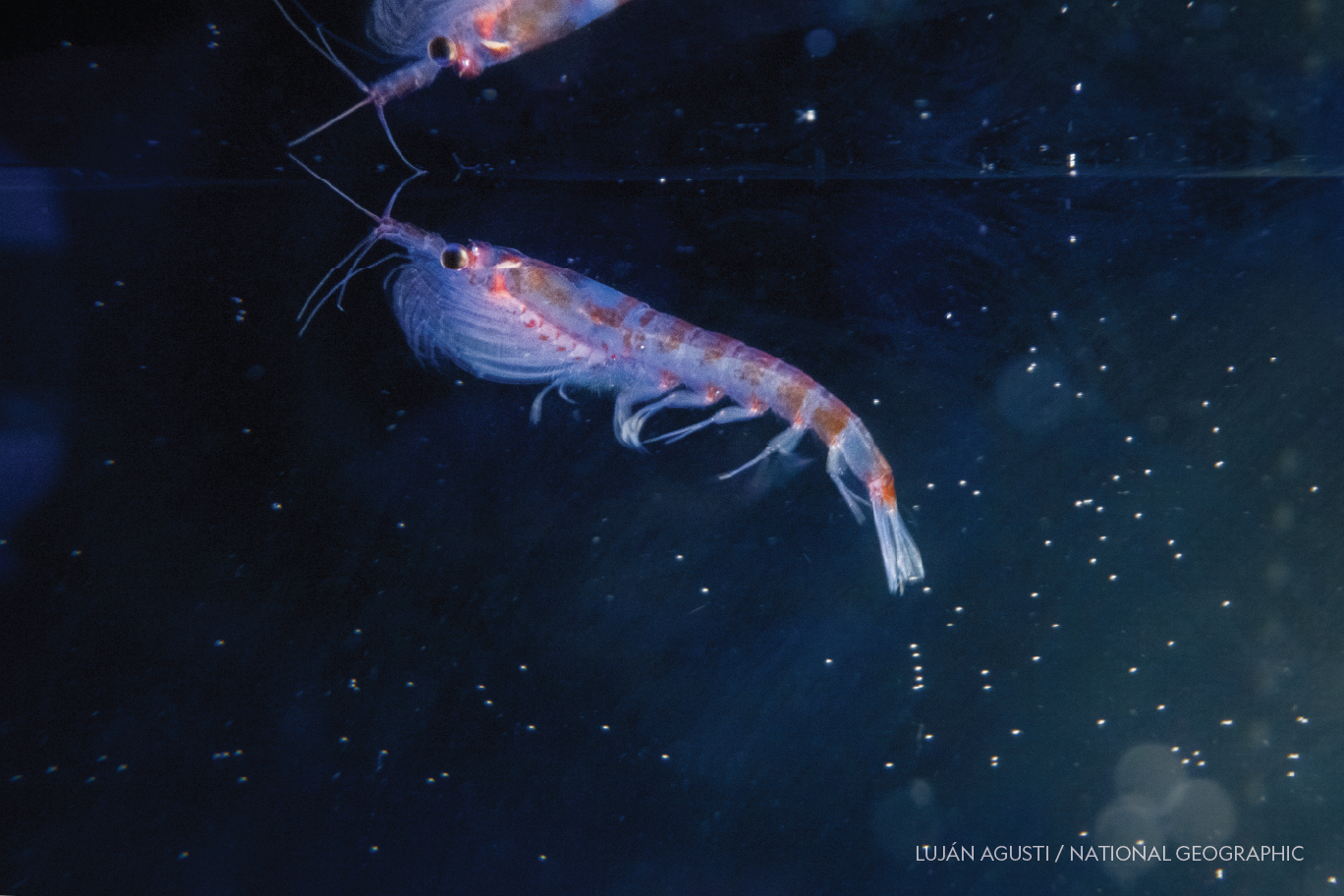
Antarctic krill serve as a crucial food source for penguins, seals, and whales. They recycle nutrients used by algae. Now researchers say they've found krill in a surprising place: hydrothermal vents.
He developed a program that became a model for hospitals around the world, making it easier for poor Black patients to navigate an onerous bureaucratic system.
A plan to halve the agency’s sprawling work force was illegal, a judge ruled. But the court is not blocking other FEMA cuts.
Thousands of planets have been discovered beyond our solar system, offering clues to where life might thrive and whether Earth is truly unique.
Troy E. Meink’s comments were the first public acknowledgment of American weapons in orbit. The Pentagon has been preparing for potential conflict in space with Russia or China.
The Times’s Science section is introducing new columns, projects and more as part of its online relaunch.
The New York Times is soliciting readers’ questions about the dangers — and benefits — posed by artificial intelligence.
Traditionally found in warm climates, like the American Southwest, armadillos have been migrating farther and farther north, researchers say.
New estimates using the planet’s surface wrinkles show that our smallest planet is growing even smaller, at a faster clip than expected.
Pick what should wake you up. We only push stories the AI rates as genuinely urgent.